
BEYOND THE DEGREE SHOW
Every year thousands of talented artists graduate into a profession with no obvious route forward. We celebrate the success stories, yet we rarely examine the system that produced them - or the many equally talented artists it quietly left behind.
For decades, the degree show has been treated as the defining launchpad of an artistic career. It is the moment when curators, collectors and galleries descend upon art schools in search of the next generation of talent. For a fortunate few, that attention becomes the beginning of something significant.
But artistic careers are rarely determined over the course of a single week.
Looking back, we often remember the breakthrough exhibition, the first gallery or the museum acquisition that appeared to change everything. Yet frequently, those milestones are almost always the consequence of years of quieter encounters that came before them. Every successful artist has a first collector, a first curator, a first journalist and often a first gallery who champions their career. Careers rarely change because of one defining opportunity. They change because one opportunity creates the conditions for the next.
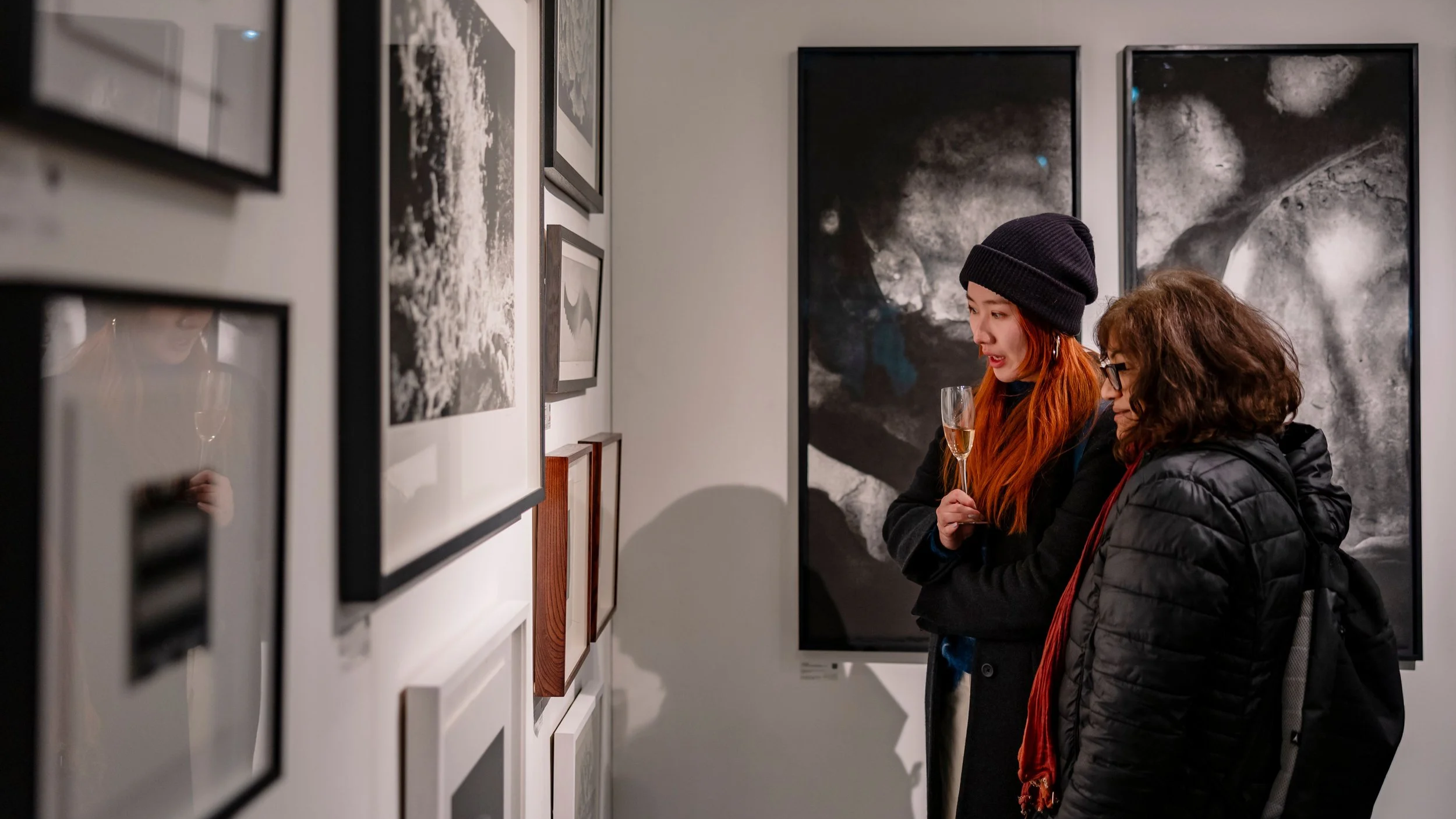
Where do those encounters actually happen?
The picture is far more complex than art school to representation to collector. Artist-led initiatives, residencies, open calls, print studios, publishers, biennials and digital platforms all contribute to a much broader ecology. Visibility and exposure has never been easier to achieve, but opportunity remains surprisingly difficult.
Artists need places where the contemporary art world genuinely converges. Collectors, curators, gallery directors, publishers, art world commentators and fellow artists all occupy different parts of the cultural landscape, but there are few environments bringing those audiences together, where career defining conversations and relationships can take place - a curator introducing an artist to a gallery; a collector recommending a practice to a museum.
Tutors, collaborators, technicians, fellow artists, collectors, publishers and curators can all play a part, often without realising it. Careers are collective achievements long before they appear to be individual ones. The question is whether that infrastructure reaches artists at precisely the point they need it most.
There is perhaps one period that remains surprisingly under-served - the years immediately after graduation, beyond the degree show but before representation. It is often during these years that exceptional practices can either gather momentum or quietly disappear from view.
Over the past decade I've reviewed thousands of applications through open calls and I’ve watched hundreds of careers develop. One of the greatest privileges has been seeing artists return with stronger work, greater confidence and a clearer sense of their practice. Careers are rarely linear. They develop through persistence, experimentation and time.
One example has stayed with me. Artist Liorah Tchiprout first exhibited at Woolwich Contemporary Print Fair having been a successful applicant of our open call. During the Fair she was introduced to Brocket Gallery, who went on to represent her and host her on their residency programme where they explored how her print practice could inform her painterly language. That relationship and defining first London exhibition became the foundation for the next stage of her career, leading first to representation through Marlborough and, more recently, to Pippy Houldsworth Gallery. Her story isn't remarkable because it followed a perfect path - very few careers do. It's remarkable because it demonstrates how careers are built. One relationship leads to another. One exhibition creates the conditions for the next.
Print has always thrived through collaborative approaches of artists, publishers, master printers and galleries. It is perhaps no coincidence that it also creates fertile ground for new professional relationships to emerge.
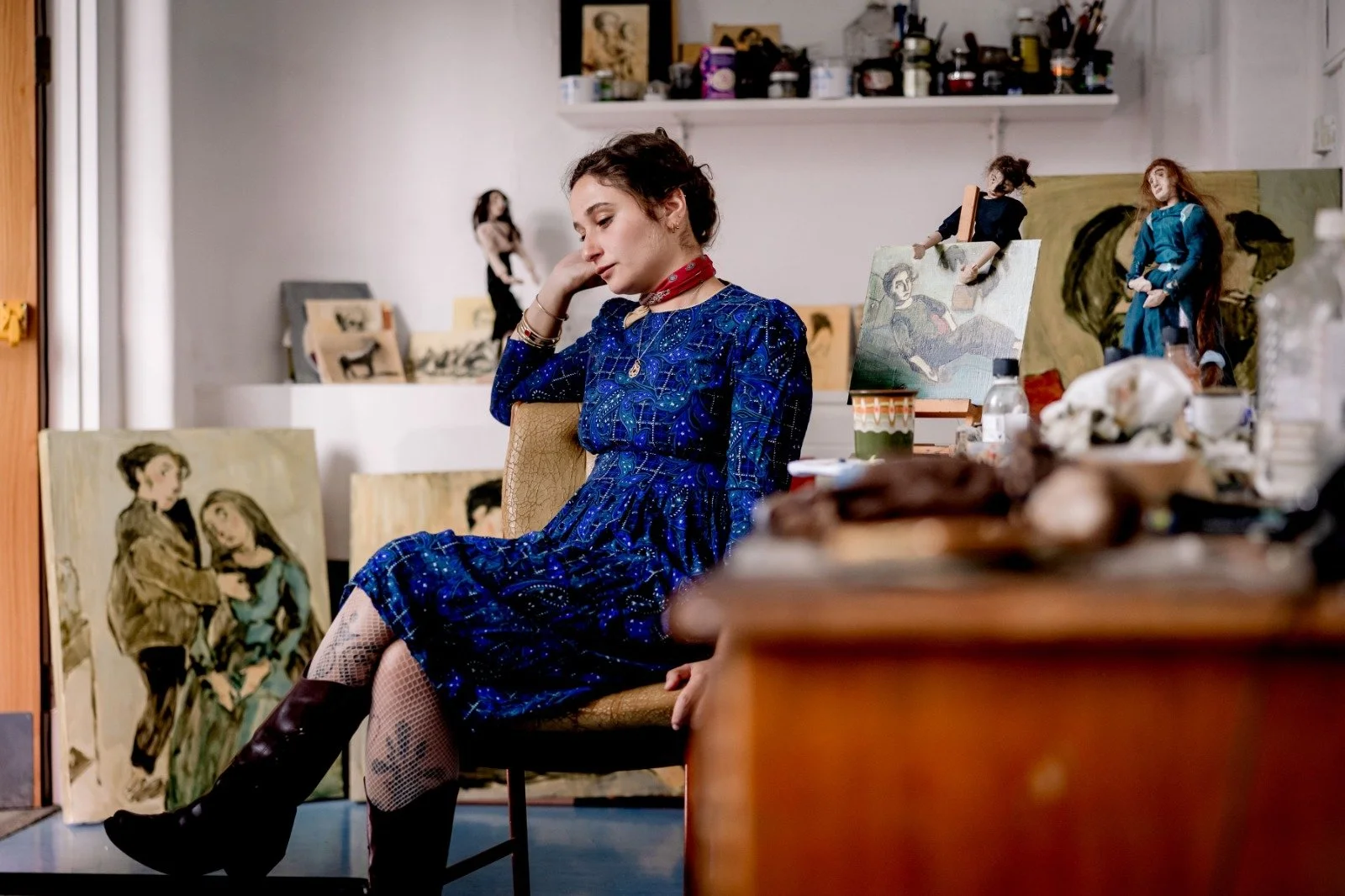
A portrait of Liorah Tchiprout in her studio (courtesy of Lizzie Glendinning)
This is where I believe the art fair has an opportunity to evolve.
Traditionally, art fairs have been designed around galleries, and rightly so, as the foundation of the contemporary art ecosystem. They invest years in artist career development, placing work in significant collections, supporting ambitious exhibitions and building careers over decades. Nothing can replace thoughtful gallery representation.
Perhaps art fairs have become exceptionally good at serving the established art world. The next challenge is becoming equally good at renewing it - recognising that fairs occupy a unique position within the cultural landscape.
Art fairs are one of the few places where collectors, curators, writers, publishers and gallery directors gather with a shared purpose, creating more opportunities for the conversations and relationships upon which careers are built.
Imprint’s Discovery section grew from the belief that an art fair can become part of the infrastructure supporting the next generation of artistic careers. By bringing ambitious artists into direct conversation with collectors, curators, publishers and galleries, it seeks to create the conditions in which future relationships can begin, through its unique model not possible at the majority of art fairs which are wholly gallery-led.
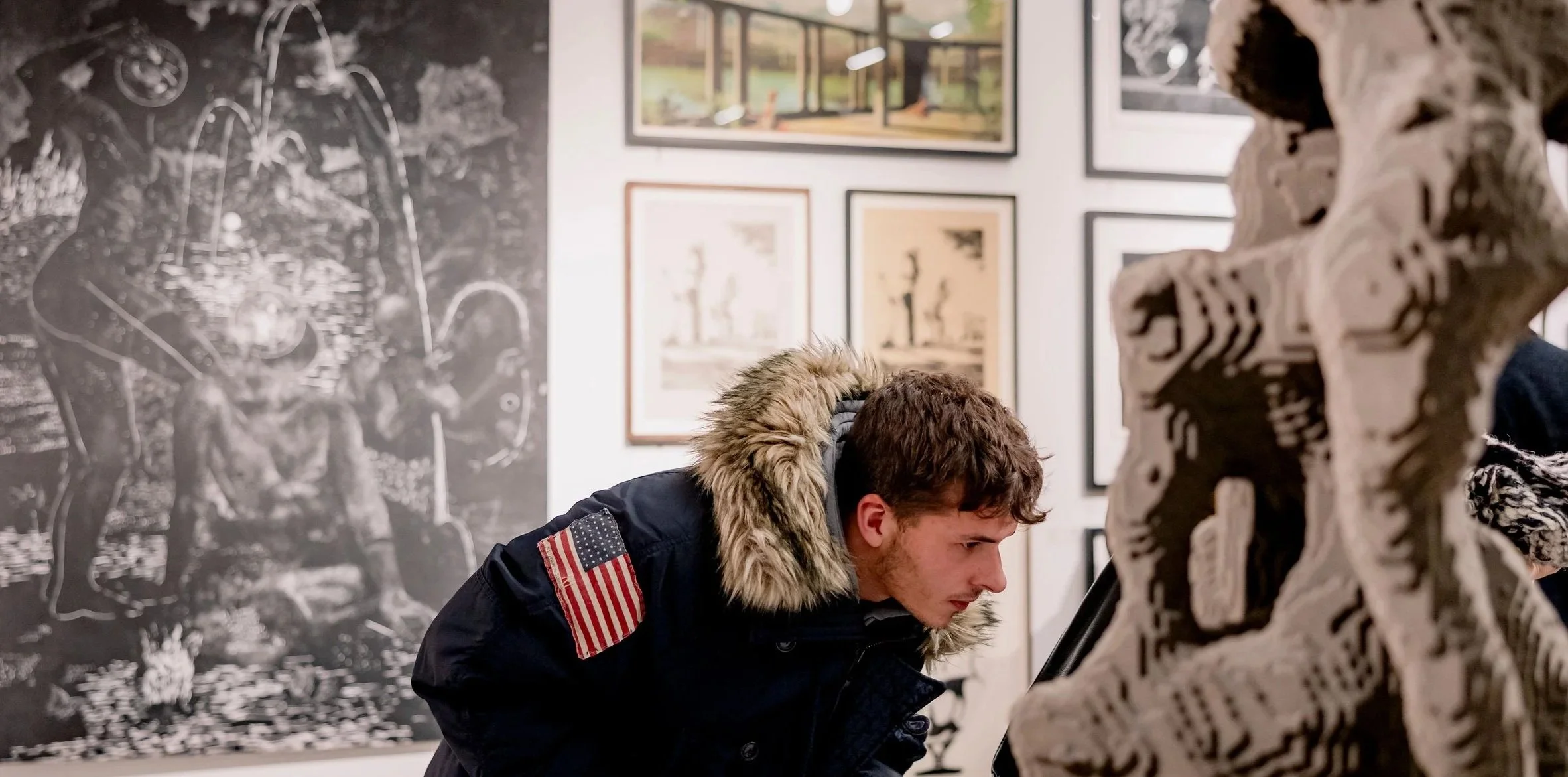
The future of contemporary art will not be determined solely by the artists we educate or the galleries we champion. It will also depend upon whether we continue creating places and spaces where talent, opportunity and curiosity connect.
