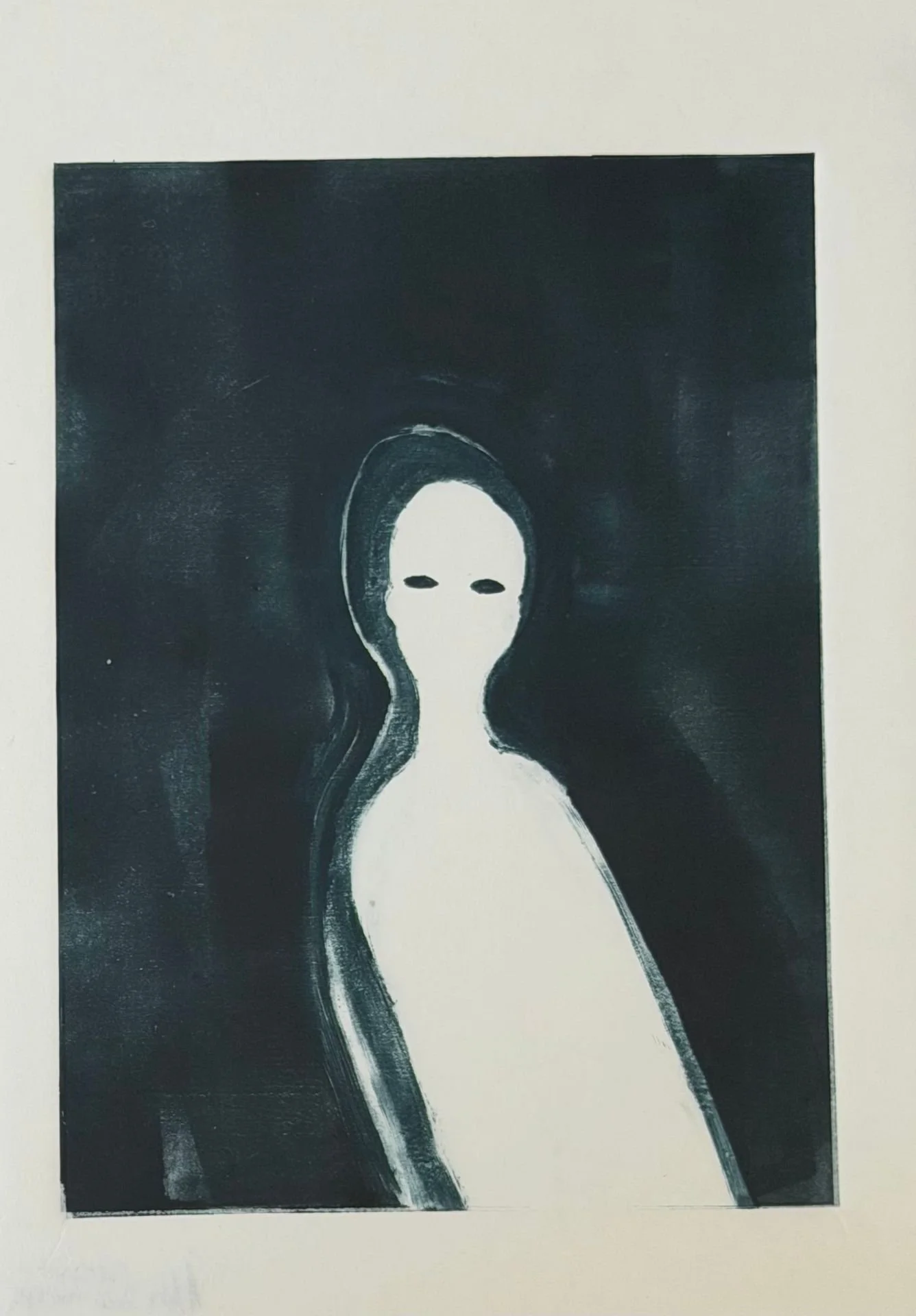
Jazz Grant is an artist whose practice explores the unstable relationship between memory, history, dreams, and fact. Working across collage, printmaking, and sculpture, Grant investigates the distortion of the past, the fabrication of stories, and the histories omitted from public narratives. Rather than treating history as a fixed or neutral account of events, their work approaches it as something continually rewritten through acts of remembering, forgetting, and reimagining. Central to this inquiry is a disruption of linear time, in which past, present, and future exist in continual dialogue.
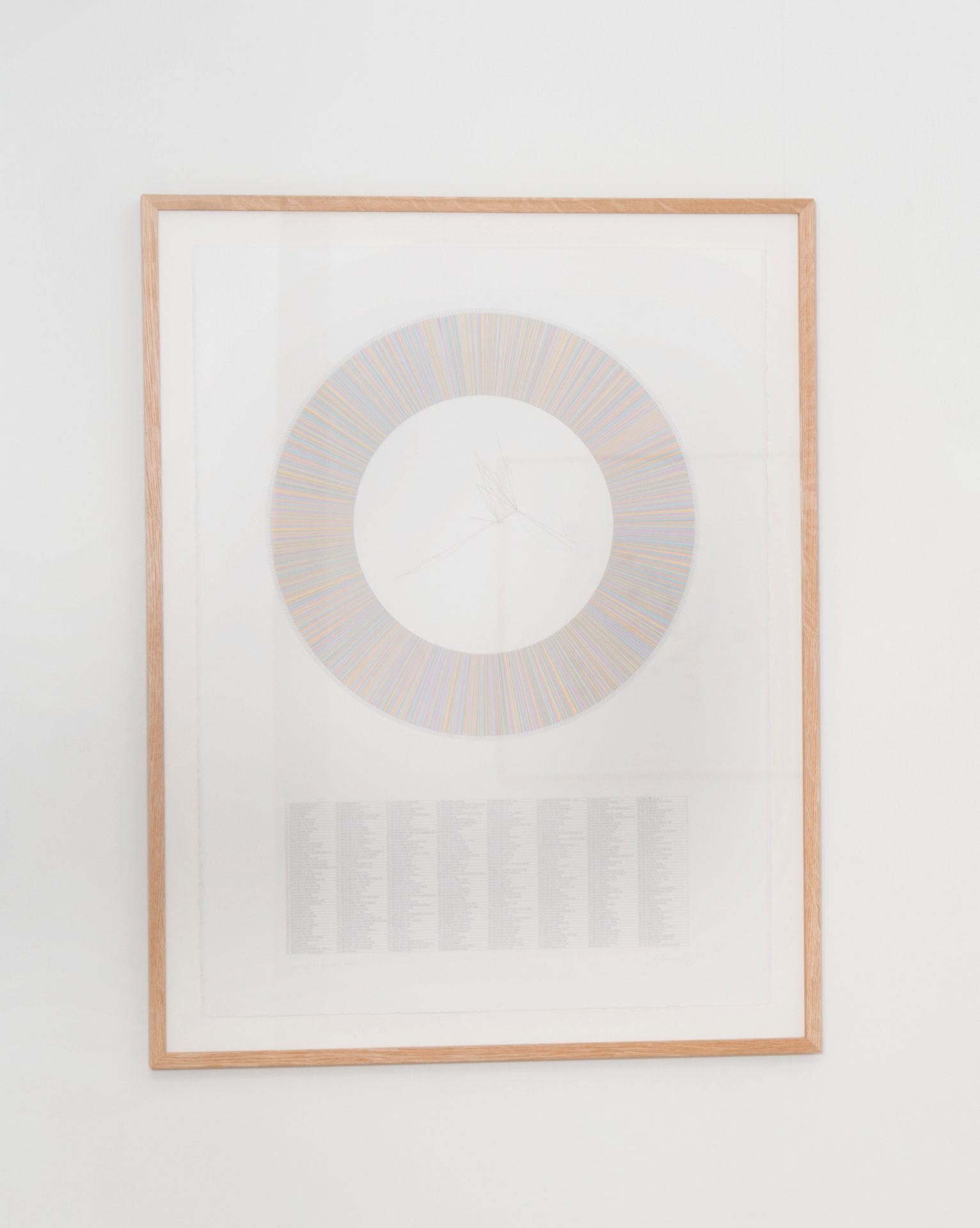
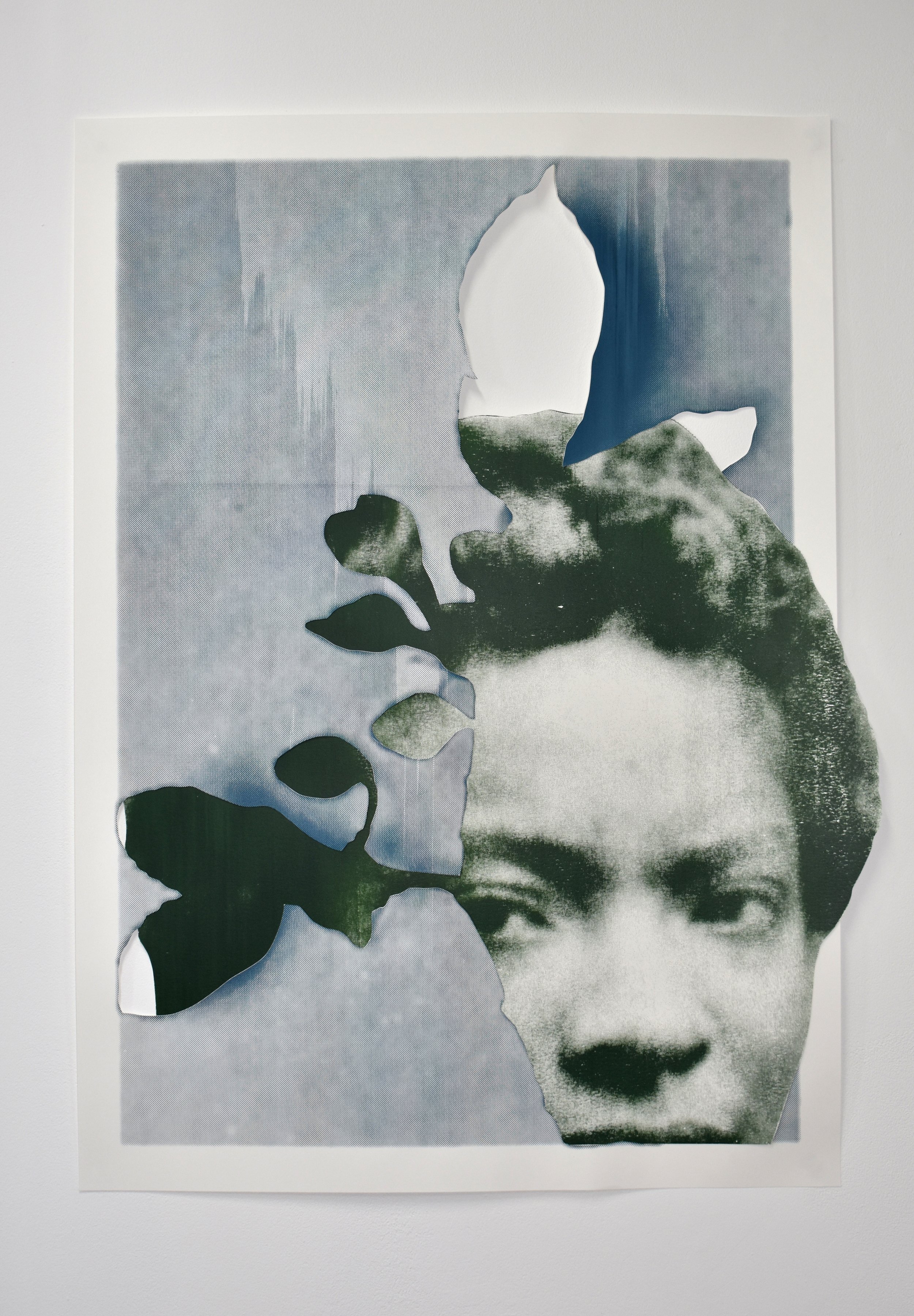
Collage forms the conceptual foundation of Grant's practice. More than a method of image-making, it is a way of gathering, disrupting, and reassembling fragments to reveal new relationships between histories, materials, and systems of knowledge. Through archival photography, political documentation, botanical imagery, and found visual material, Grant considers how memory is constructed and how meaning shifts through proximity and juxtaposition.
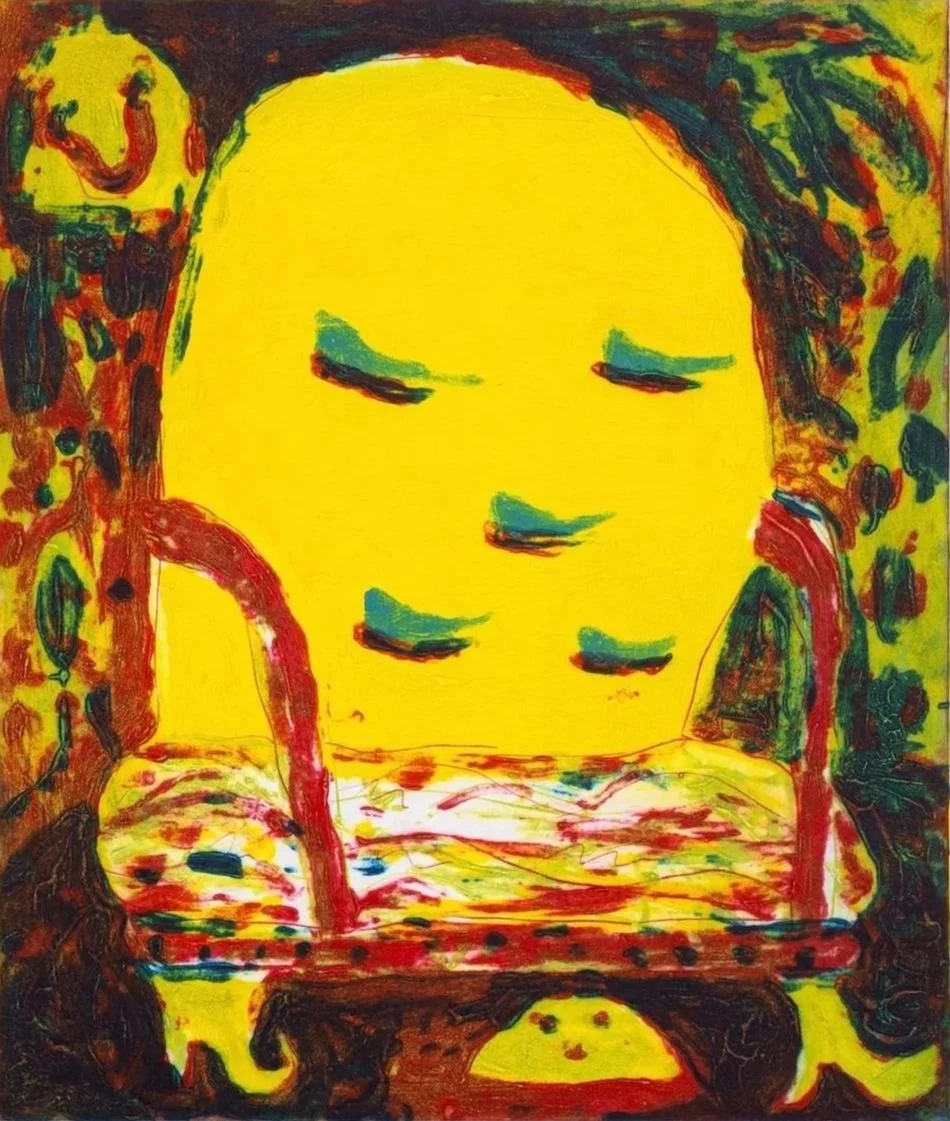
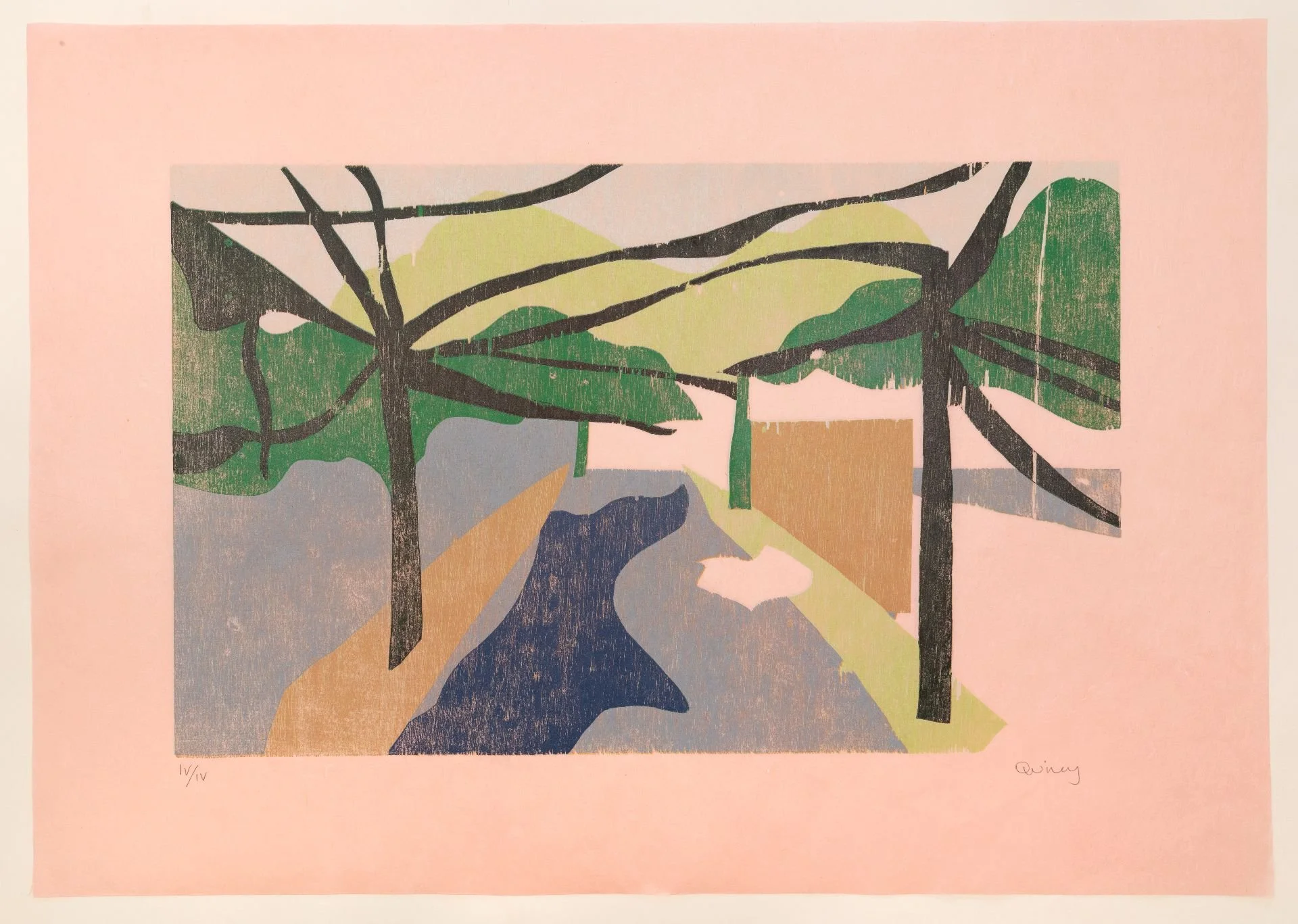
Screen printing has expanded Grant's engagement with colour, materiality, and process, allowing the work to move across paper and wood while embracing the unpredictable qualities of each surface. The grain of the wood becomes an active collaborator, interrupting and reshaping the printed image through its own material presence. Sculpture has emerged from this process as an extension of collage into three-dimensional space, where images and fragments intersect physically as well as visually.
Botanical forms recur throughout Grant's work as structures of connection rather than decoration. Flowers and systems of classification become carriers of memory, bringing political protest, ecological instability, archival imagery, and women's perspectives into conversation. Grant is interested in the ways these visual languages cross-pollinate, unsettling familiar hierarchies and suggesting that histories, like living ecosystems, are constantly adapting, mutating, and being rewritten. Grant’s sculptural works are often designed to be assembled, dismantled, and reconfigured, reinforcing the idea that identity, memory, and preservation are never complete, but always in negotiation.
Jazz Grant is an artist whose practice explores the unstable relationship between memory, history, dreams, and fact. Working across collage, printmaking, and sculpture, Grant investigates the distortion of the past, the fabrication of stories, and the histories omitted from public narratives. Rather than treating history as a fixed or neutral account of events, their work approaches it as something continually rewritten through acts of remembering, forgetting, and reimagining. Central to this inquiry is a disruption of linear time, in which past, present, and future exist in continual dialogue.
Collage forms the conceptual foundation of Grant's practice. More than a method of image-making, it is a way of gathering, disrupting, and reassembling fragments to reveal new relationships between histories, materials, and systems of knowledge. Through archival photography, political documentation, botanical imagery, and found visual material, Grant considers how memory is constructed and how meaning shifts through proximity and juxtaposition.
Screen printing has expanded Grant's engagement with colour, materiality, and process, allowing the work to move across paper and wood while embracing the unpredictable qualities of each surface. The grain of the wood becomes an active collaborator, interrupting and reshaping the printed image through its own material presence. Sculpture has emerged from this process as an extension of collage into three-dimensional space, where images and fragments intersect physically as well as visually.
Botanical forms recur throughout Grant's work as structures of connection rather than decoration. Flowers and systems of classification become carriers of memory, bringing political protest, ecological instability, archival imagery, and women's perspectives into conversation. Grant is interested in the ways these visual languages cross-pollinate, unsettling familiar hierarchies and suggesting that histories, like living ecosystems, are constantly adapting, mutating, and being rewritten. Grant’s sculptural works are often designed to be assembled, dismantled, and reconfigured, reinforcing the idea that identity, memory, and preservation are never complete, but always in negotiation.