Ana Fernandez lives in Spain and the United States. Her artwork explores representations of the human form, microbiology, the cosmos, and an expanded view of the body we inhabit. Her practice began in her birth country, Spain, and was rooted in drawing. After moving to the United States in her teens, her work expanded to include printmaking, painting, collage, fibers, and papermaking. It reflects a tactile sensibility and an affinity for layering, patterning, and ornamentation.
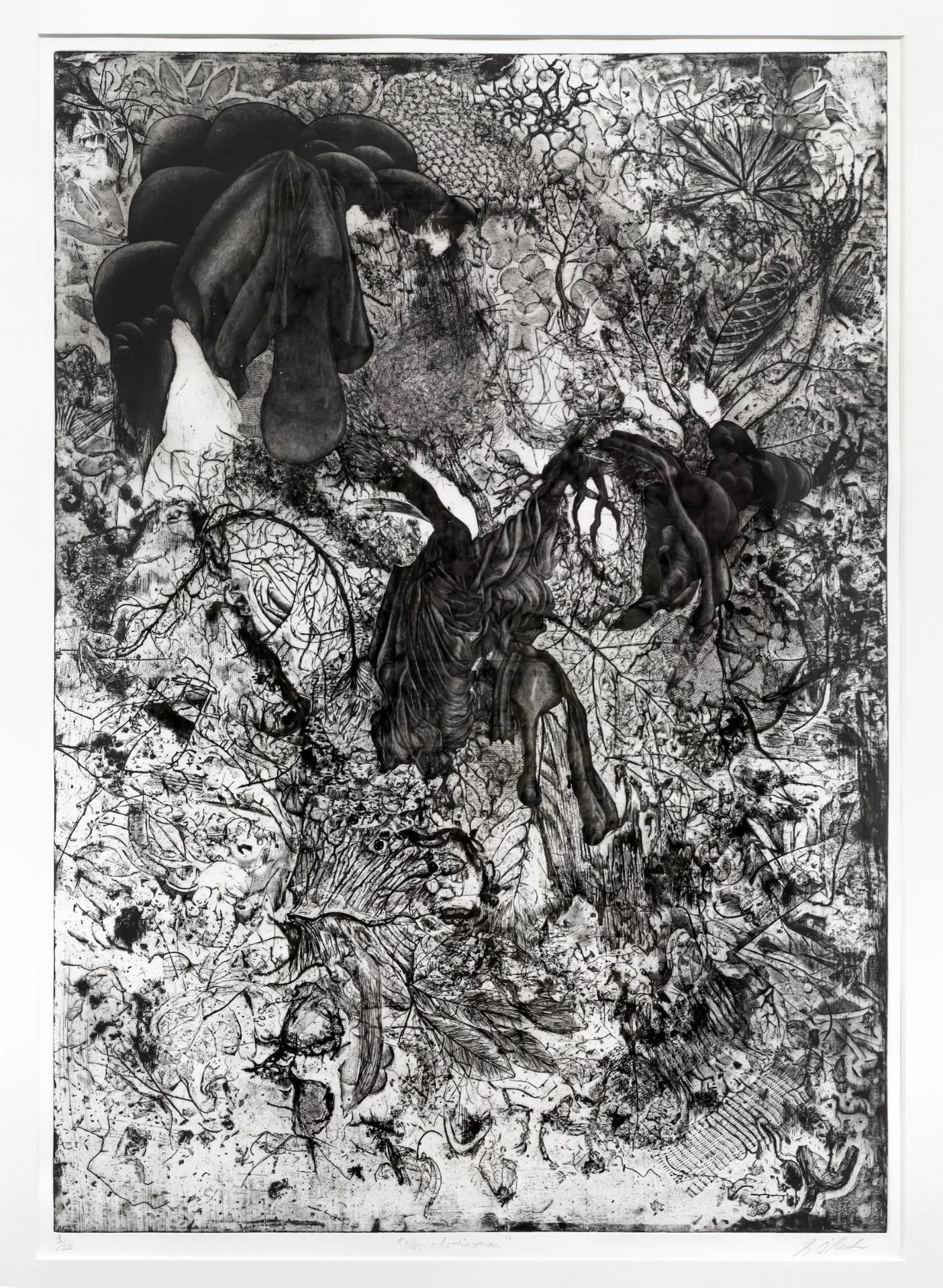
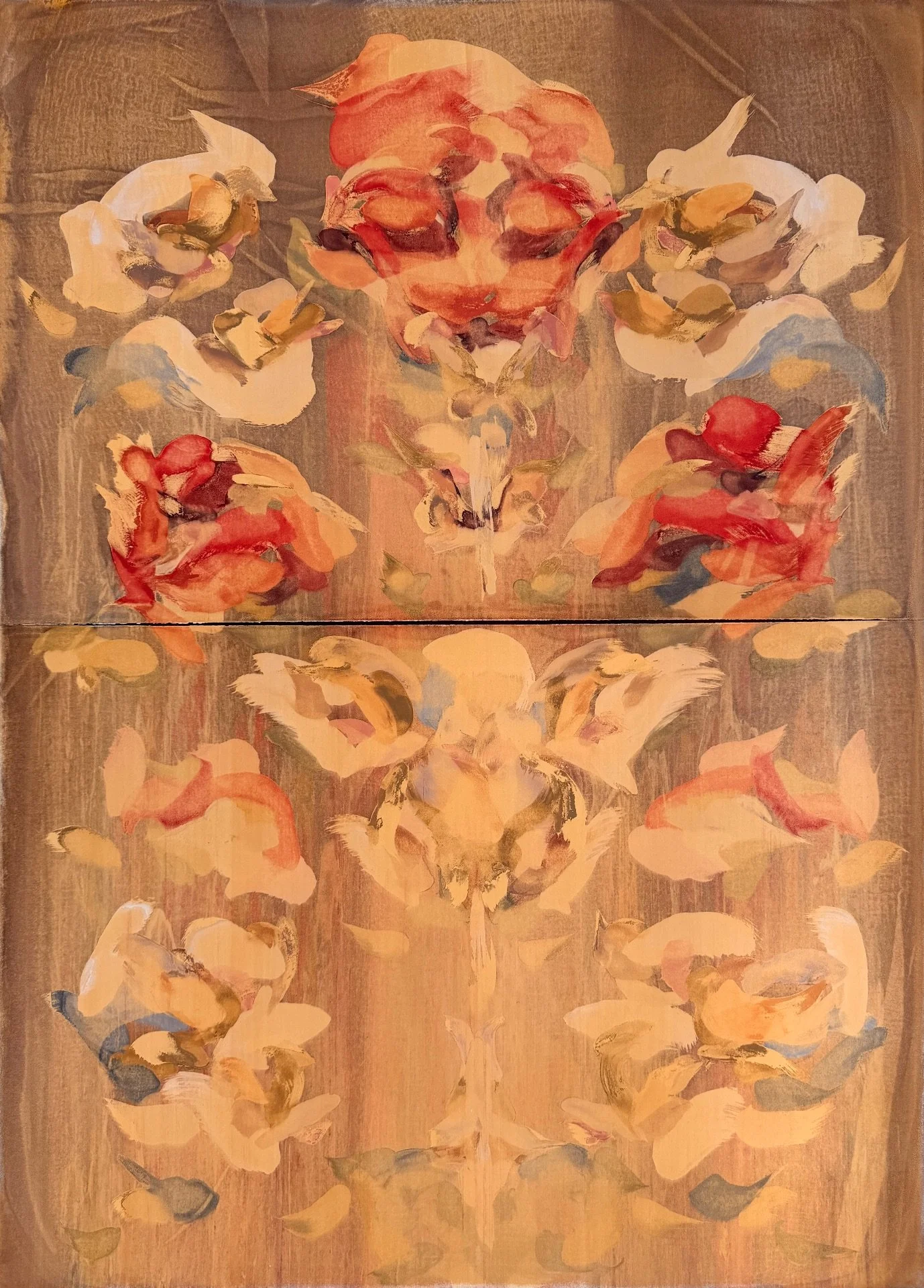
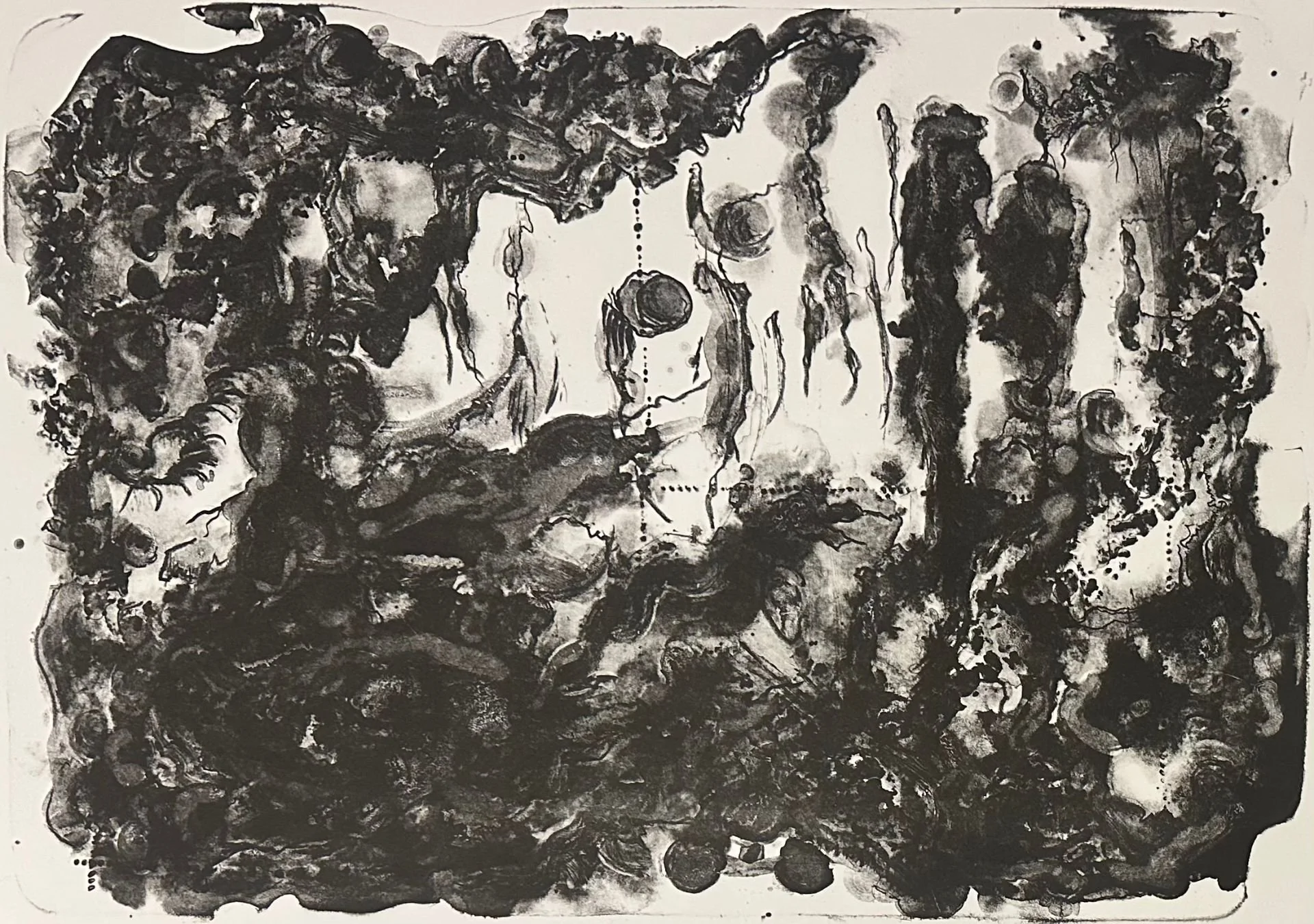
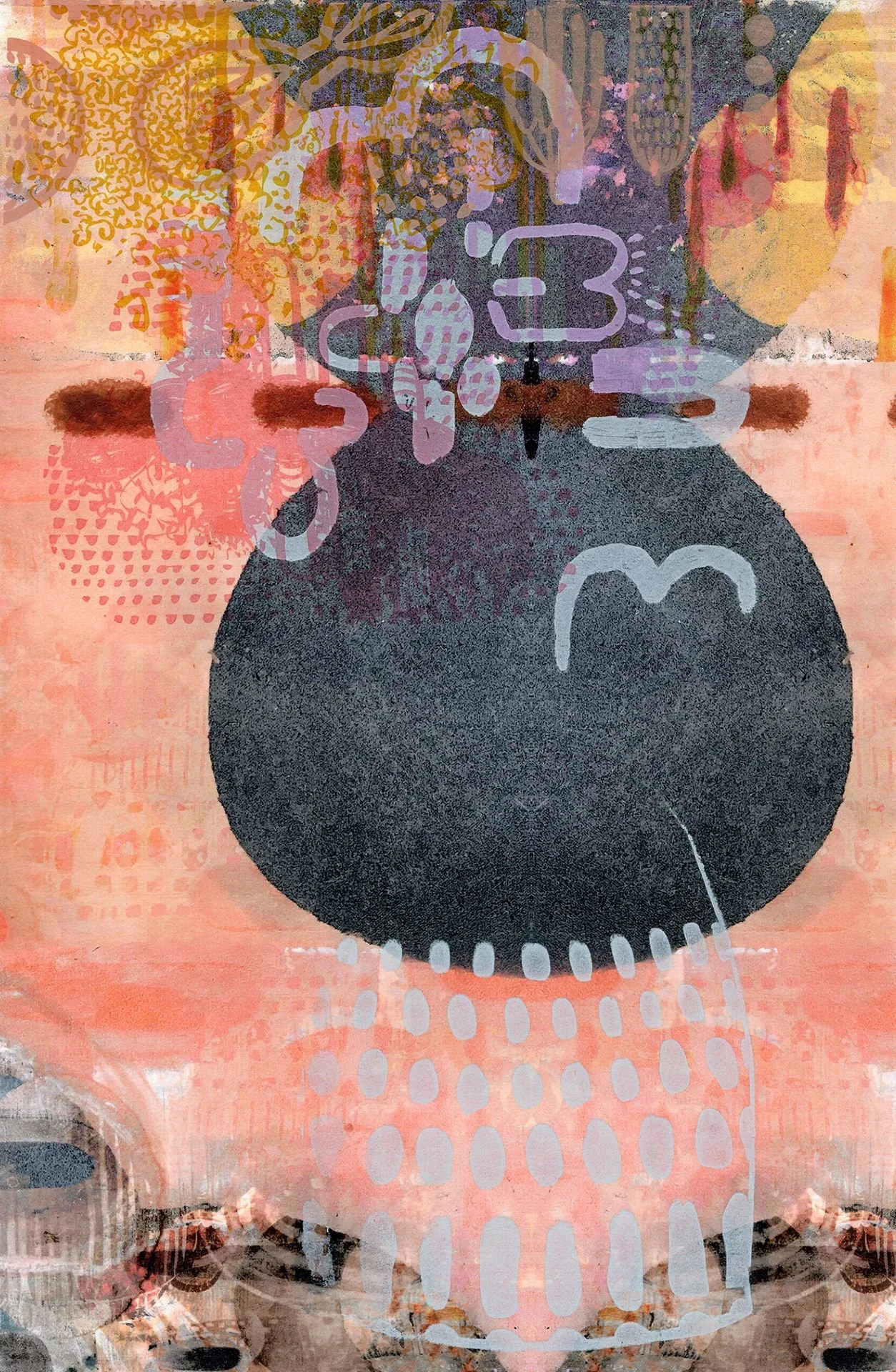
Thematically, Fernandez originally focused on the interaction among the female body, advertising, and fashion, viewing the female body as a repository of cultural and psychological experiences. She was interested in how fashion is implicated in constructing particular identities and conceptions of female beauty. Later, her interest shifted toward the formal relationships between the body and the layers that wrap it—skin and garment—as a meditation on identity and self. More recently, she has become invested in representing the female body in a different way altogether. No longer primarily concerned with its outer shell, she is inspired by imagined visions of its insides, microbiology, and a pulsing emotional and spiritual inner landscape. She views the body as connected to nature and to perennial, inexplicable forces that guide and shape it, offering a less concrete and finite way of understanding embodiment.
Ana Fernandez lives in Spain and the United States. Her artwork explores representations of the human form, microbiology, the cosmos, and an expanded view of the body we inhabit. Her practice began in her birth country, Spain, and was rooted in drawing. After moving to the United States in her teens, her work expanded to include printmaking, painting, collage, fibers, and papermaking. It reflects a tactile sensibility and an affinity for layering, patterning, and ornamentation.
Thematically, Fernandez originally focused on the interaction among the female body, advertising, and fashion, viewing the female body as a repository of cultural and psychological experiences. She was interested in how fashion is implicated in constructing particular identities and conceptions of female beauty. Later, her interest shifted toward the formal relationships between the body and the layers that wrap it—skin and garment—as a meditation on identity and self. More recently, she has become invested in representing the female body in a different way altogether. No longer primarily concerned with its outer shell, she is inspired by imagined visions of its insides, microbiology, and a pulsing emotional and spiritual inner landscape. She views the body as connected to nature and to perennial, inexplicable forces that guide and shape it, offering a less concrete and finite way of understanding embodiment.