Climate-Adapted Cyanotype Edition of Dimensions (WxH): 361 x 208cm
Aindreas Scholz is a German Irish artist based in London, working with cyanotype as an original printmaking process. His practice revisits this 19th century photographic method through a contemporary ecological lens, using sunlight, water, salt, plant matter and site responsive materials to create cameraless prints.
Rather than treating cyanotype only as a historical or photographic technique, Scholz approaches it as a living print process, shaped by chemistry, weather, place and environmental conditions. Each work is made by hand through direct exposure and contact, allowing the materials themselves to become part of the print.
His recent work explores how cyanotype can respond to climate change, marine pollution and the vulnerability of bodies of water. By preparing chemistry with polluted seawater, and working with natural light and found materials, Scholz connects the image making process directly to the ecological concerns it addresses. Through this, his practice considers how original printmaking can become more sustainable, materially aware and environmentally engaged.
Get notified by email when this product is in stock.
Climate-Adapted Cyanotype Edition of Dimensions (WxH): 361 x 208cm
Aindreas Scholz is a German Irish artist based in London, working with cyanotype as an original printmaking process. His practice revisits this 19th century photographic method through a contemporary ecological lens, using sunlight, water, salt, plant matter and site responsive materials to create cameraless prints.
Rather than treating cyanotype only as a historical or photographic technique, Scholz approaches it as a living print process, shaped by chemistry, weather, place and environmental conditions. Each work is made by hand through direct exposure and contact, allowing the materials themselves to become part of the print.
His recent work explores how cyanotype can respond to climate change, marine pollution and the vulnerability of bodies of water. By preparing chemistry with polluted seawater, and working with natural light and found materials, Scholz connects the image making process directly to the ecological concerns it addresses. Through this, his practice considers how original printmaking can become more sustainable, materially aware and environmentally engaged.

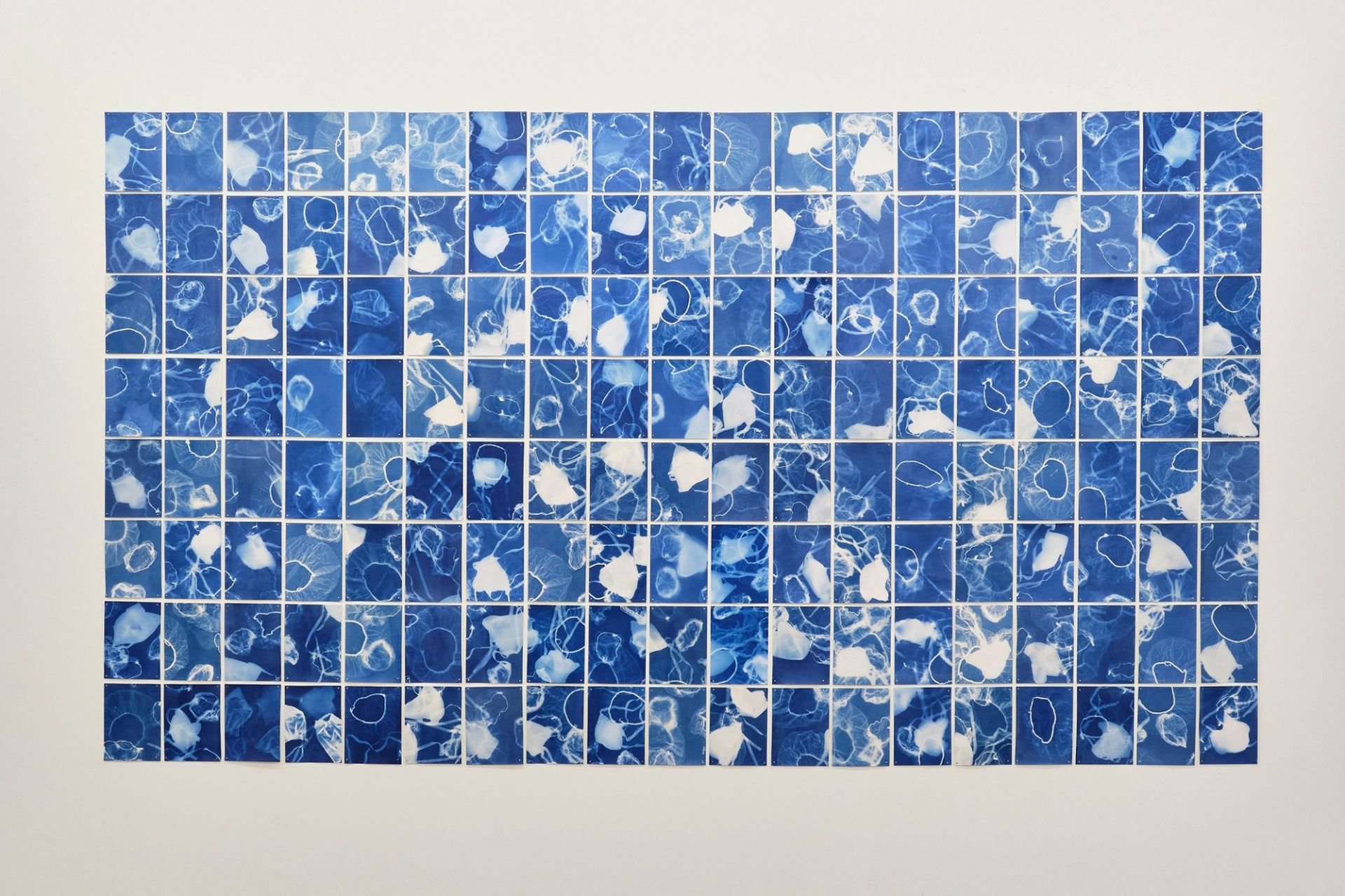 Image 1 of 1