Printmaking (Drypoint) Edition of 10 Dimensions (WxH): 37 x 56cm
Duncan Wylie (b. 1975, Harare) is a visual artist living and working in London. His dynamic practice is directly connected to his experience as an African artist in Europe, having first trained and gained citizenship in Paris before settling in the UK.
While internationally recognized for his expressive, multi-layered paintings, Wylie brings the same sense of urgency and technical mastery to his printmaking.
His graphic works, particularly the drypoint etchings from his series (Various) Disasters of Democracy, offer a raw investigation of systemic collapse. Reminiscent of Alfred Kubin’s haunting aesthetics, Wylie’s engravings explore the demonic and surreal possibilities within our modern sociopolitical landscape.
Through rigorous mark-making and stark contrasts, he addresses themes of displacement, memory and structural fragility.
As philosopher Philip Hautmann notes, Wylie’s art remains universal, with messages of universal significance and validity... in the hope that it transmits there is admonition, in its admonition there is hope.
Coinciding with the release of his first major monograph, Wylie’s print practice stands as a powerful testament to resilience amid chaos.
Get notified by email when this product is in stock.
Printmaking (Drypoint) Edition of 10 Dimensions (WxH): 37 x 56cm
Duncan Wylie (b. 1975, Harare) is a visual artist living and working in London. His dynamic practice is directly connected to his experience as an African artist in Europe, having first trained and gained citizenship in Paris before settling in the UK.
While internationally recognized for his expressive, multi-layered paintings, Wylie brings the same sense of urgency and technical mastery to his printmaking.
His graphic works, particularly the drypoint etchings from his series (Various) Disasters of Democracy, offer a raw investigation of systemic collapse. Reminiscent of Alfred Kubin’s haunting aesthetics, Wylie’s engravings explore the demonic and surreal possibilities within our modern sociopolitical landscape.
Through rigorous mark-making and stark contrasts, he addresses themes of displacement, memory and structural fragility.
As philosopher Philip Hautmann notes, Wylie’s art remains universal, with messages of universal significance and validity... in the hope that it transmits there is admonition, in its admonition there is hope.
Coinciding with the release of his first major monograph, Wylie’s print practice stands as a powerful testament to resilience amid chaos.

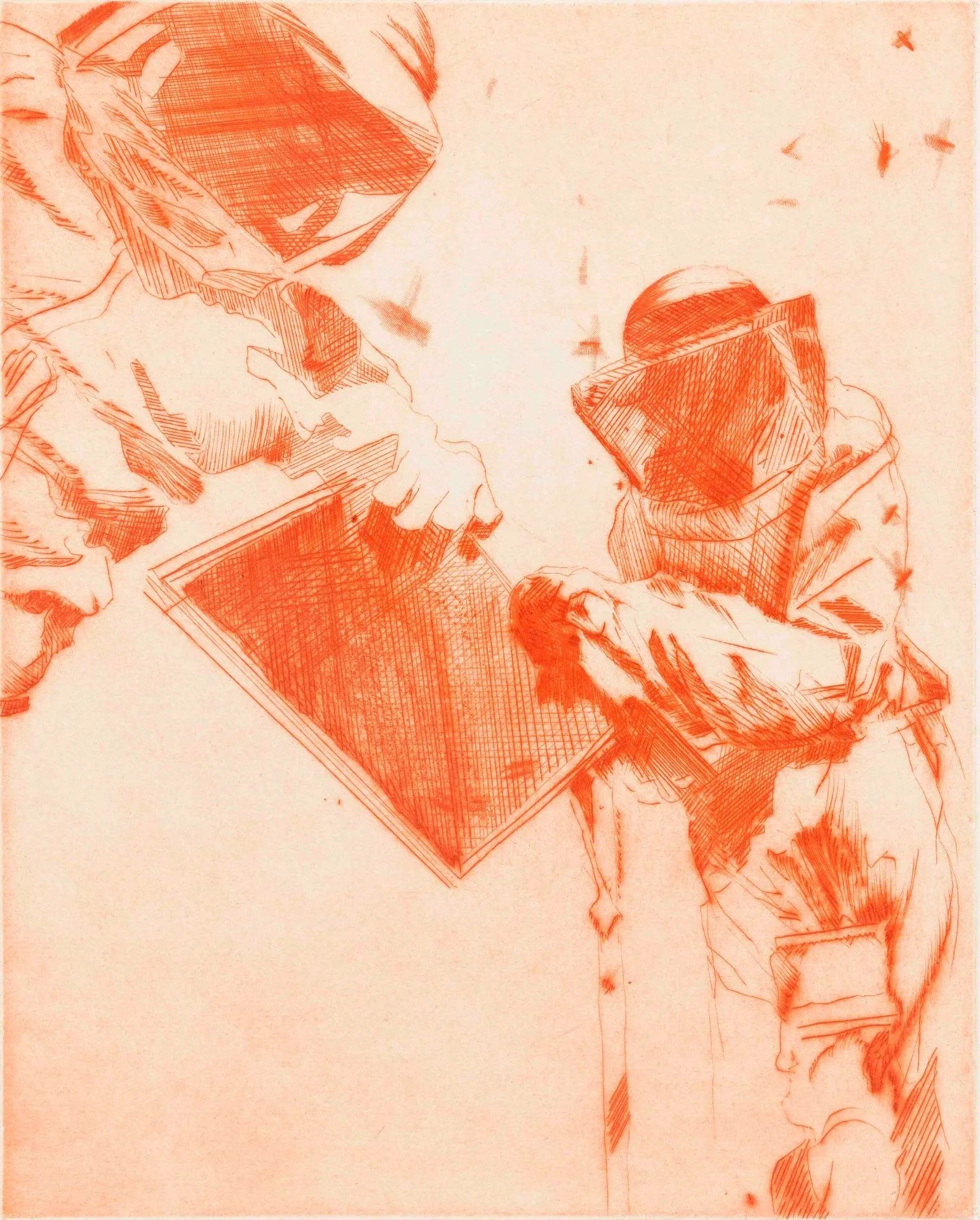 Image 1 of 1