
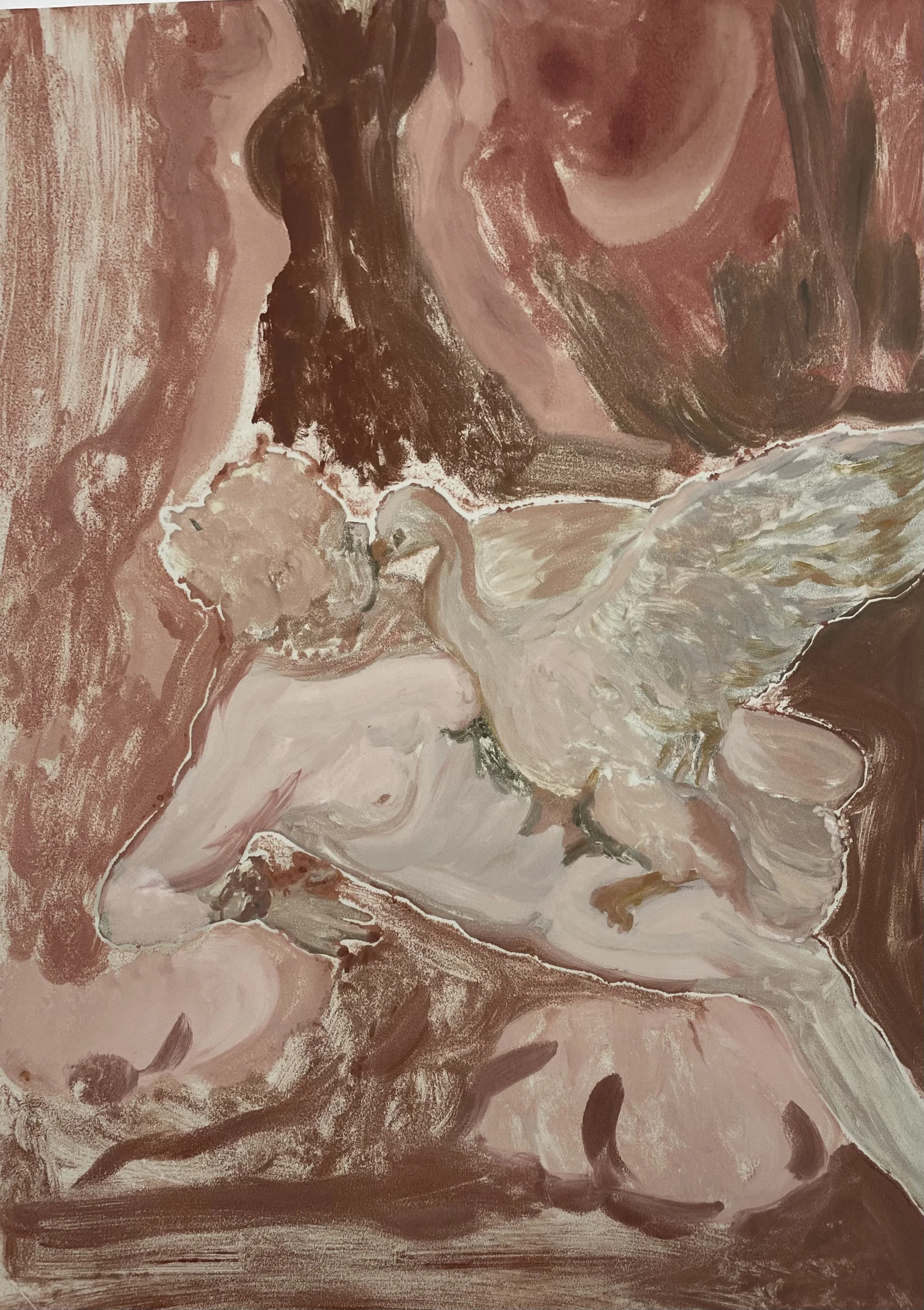
Monotype
Monotype is a printmaking process that produces a single, unique impression. The artist paints or draws directly onto a smooth, unaltered plate—often metal, acrylic, or glass—without carving, etching, or engraving into its surface. Because the plate contains no permanent marks, each print is the result of a one-time arrangement of ink.
Once the image has been composed on the plate, paper is laid over it and passed through a press, transferring the ink to the sheet. The pressure of the press captures the movement and texture of the applied ink, often preserving painterly gestures, soft edges, and subtle tonal transitions. A faint second impression may sometimes be pulled, but it will differ significantly from the first.
Monotype differs from monoprint in that there are no fixed elements on the plate. In a monoprint, the plate may contain etched lines, engraved features, or other permanent characteristics that repeat from print to print, even as the inking varies. In contrast, a monotype begins with a blank surface each time, meaning no consistent image can be reproduced.
Because of this, monotypes occupy a space between painting and printmaking. They combine the direct, spontaneous quality of working with wet ink and the controlled pressure of the press. The resulting works are valued for their individuality, fluidity, and the balance between intentional mark-making and the unpredictable effects of transfer.
-
Ink or paint is applied directly onto a smooth plate.
The image is worked by hand using brushes, rollers, or tools.
Paper is pressed onto the plate.
The image transfers once, producing a single primary impression.
-
Unique, painterly surface.
Soft edges and fluid mark-making.
Visible gestures and tonal variation.
Often closer to drawing or painting than to repeatable print processes.
-
Only one strong impression is produced from the prepared plate.
A second, lighter “ghost” print may sometimes be taken.
Traditional editions do not apply in the usual sense.
-
Each monotype is inherently unique.
Rarity derives from singularity rather than limited edition size.
Value reflects its status as a one-off work within printmaking.