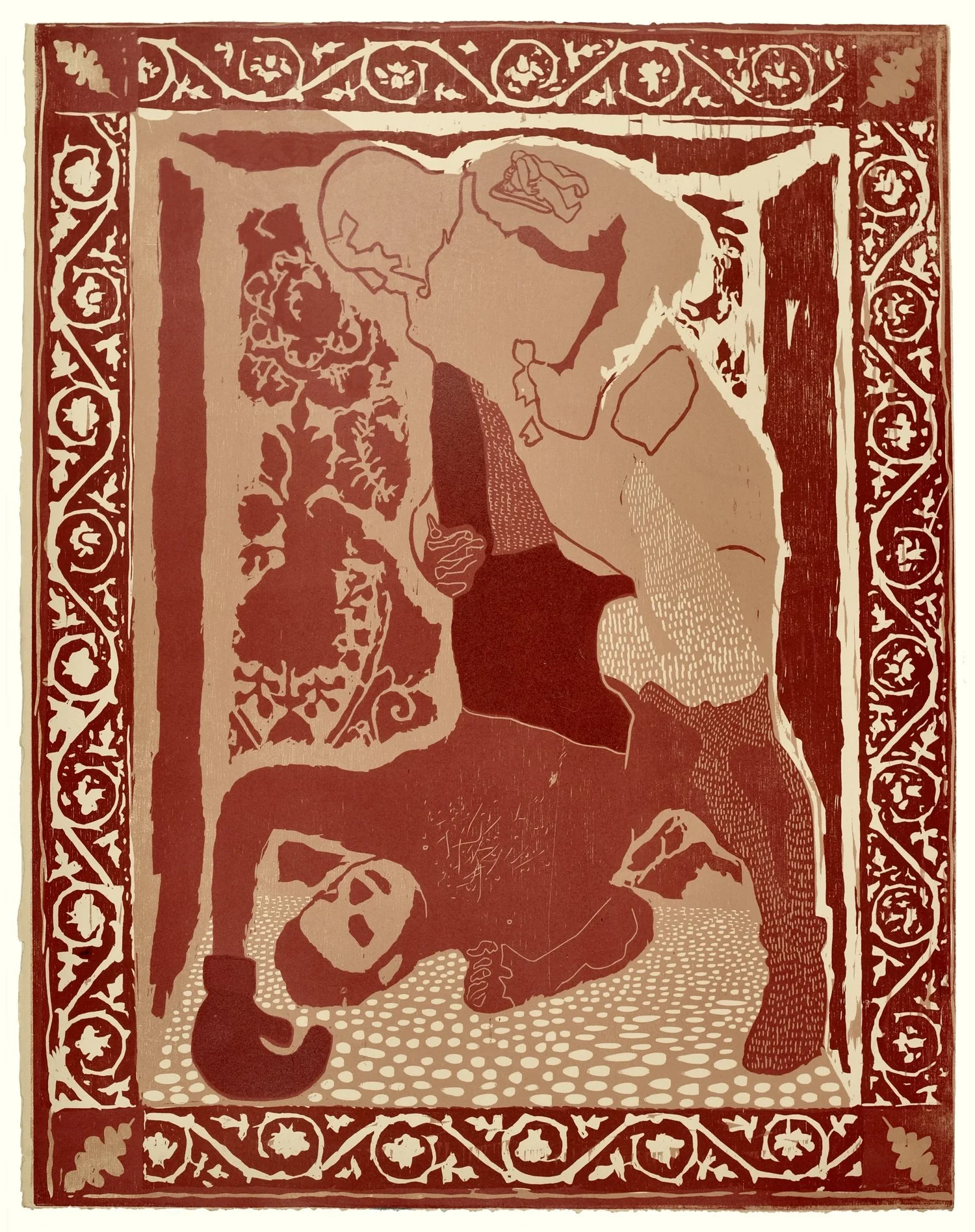
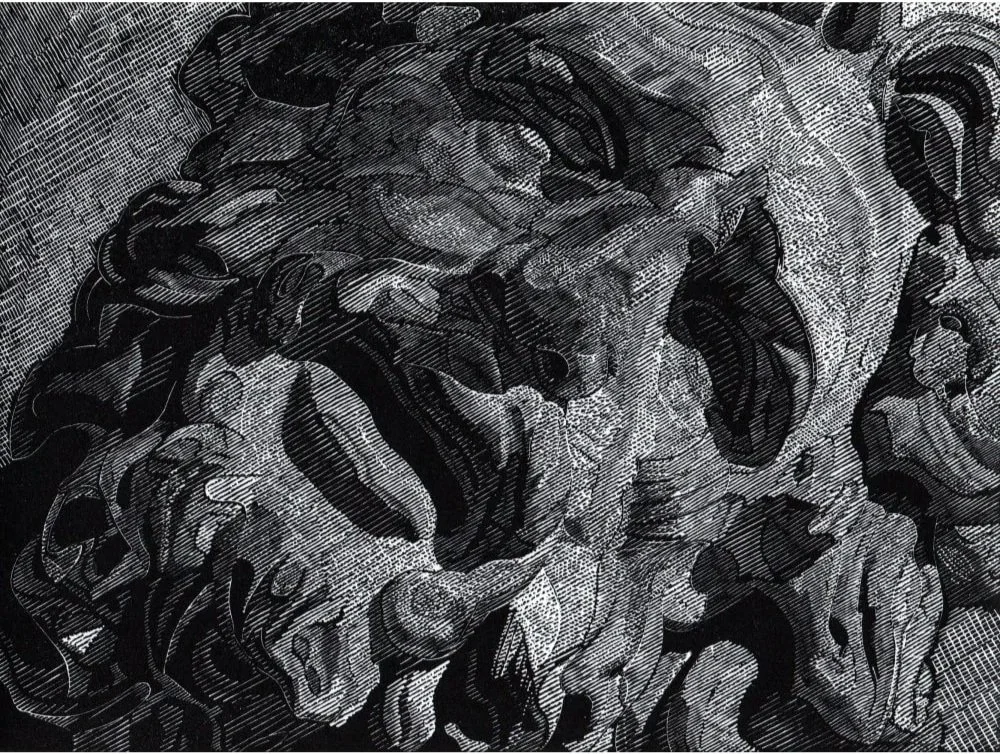
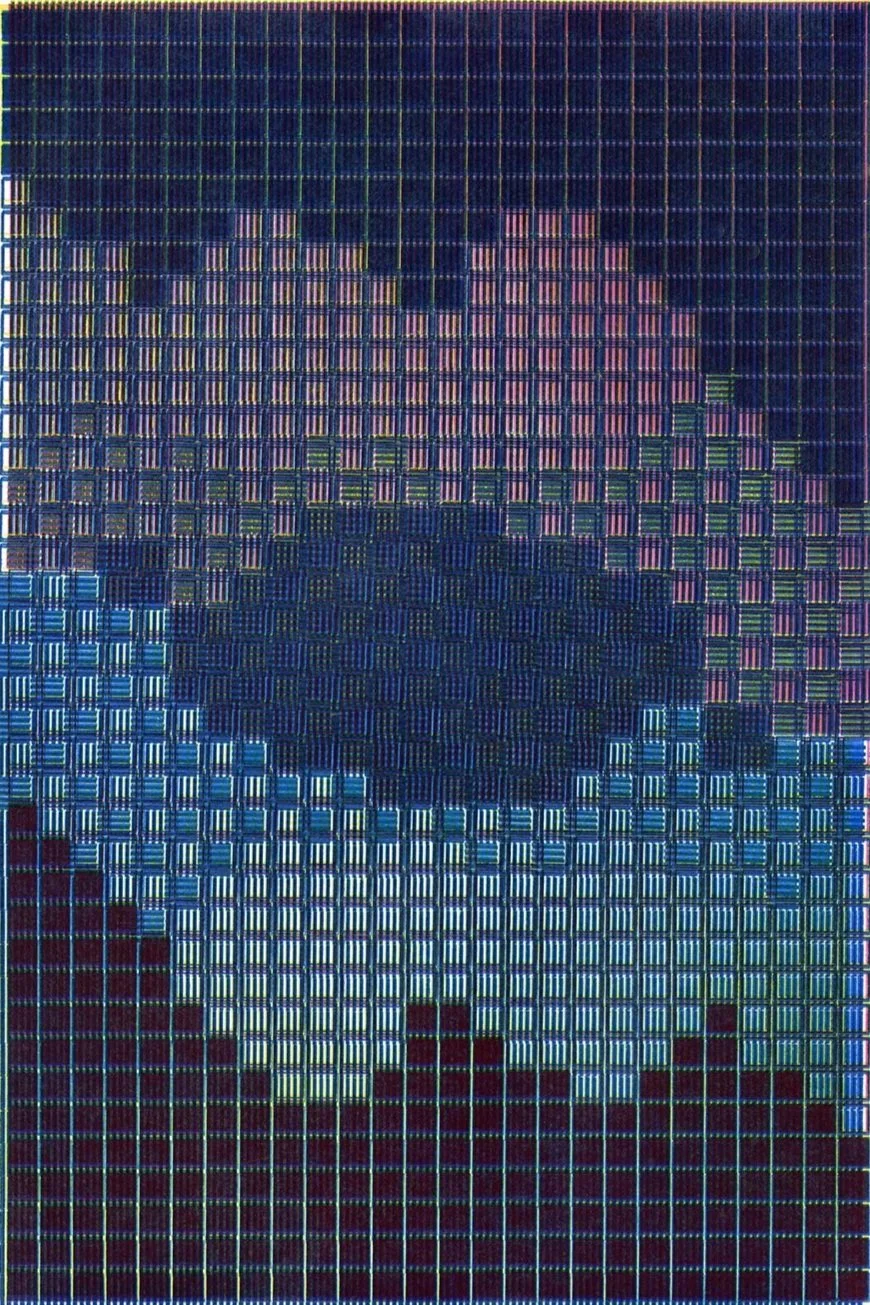
Relief printmaking is based on a simple principle: the raised areas of a surface carry the ink. The artist carves away the parts that are not meant to print, leaving the image standing in relief. When ink is rolled across the surface and paper is pressed on top, the raised areas transfer the image directly.
Because the matrix remains visible and physical, relief prints often retain a strong graphic clarity and a direct relationship to the carved surface. The material—whether wood, linoleum, or type—shapes the character of the image, and the pressure of printing leaves subtle evidence of the process. Relief techniques are among the oldest forms of printmaking, yet they continue to support both traditional and contemporary approaches.