
WOODCUT
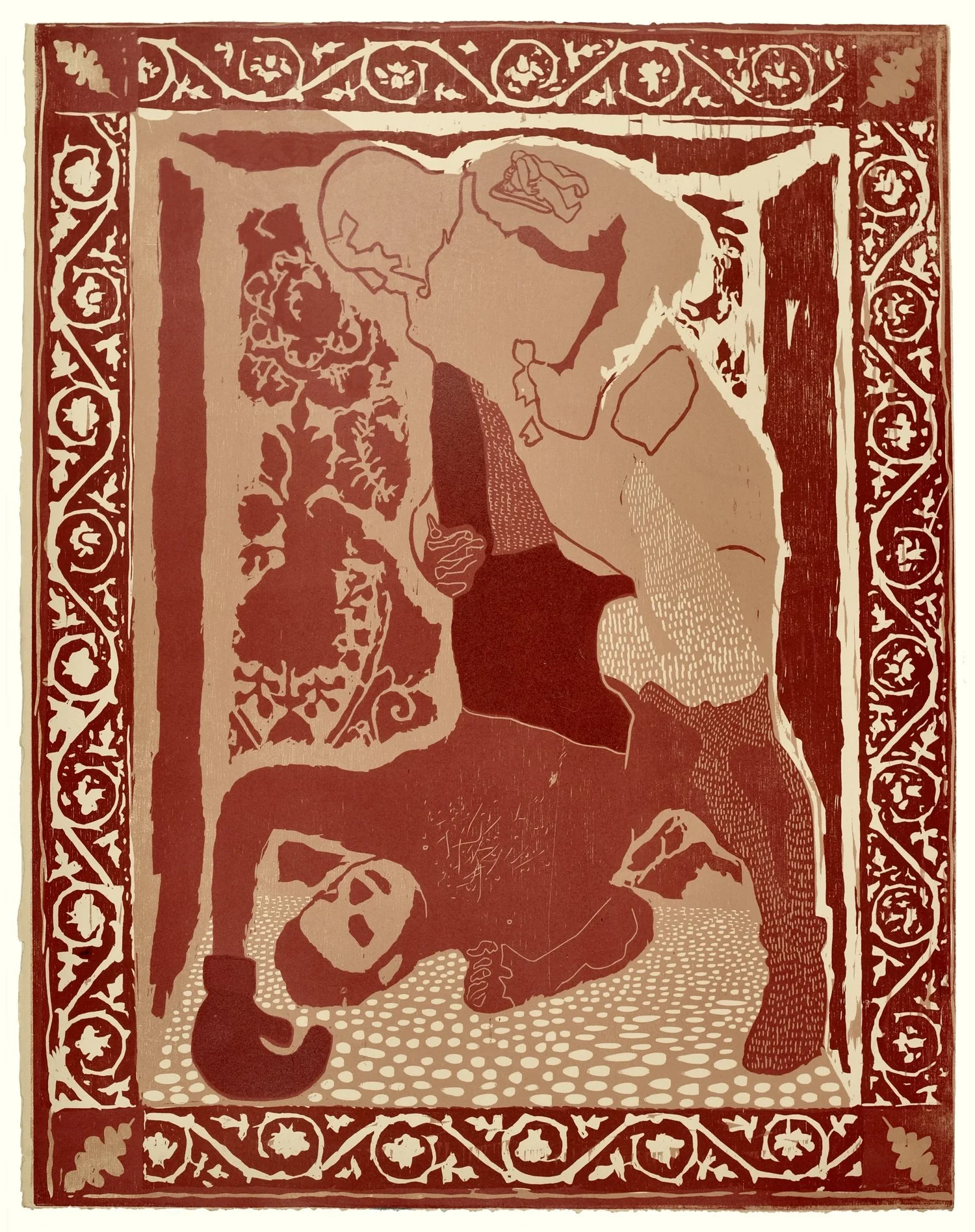
Also referred to as a woodblock, a woodcut is a relief printmaking process in which an image is carved into a block of wood, leaving the raised areas to hold the ink. The artist works directly on the surface of the block—traditionally cut from softwood—removing the areas that are not meant to print.
Ink is applied to the raised surface, and paper is then placed on top and printed either by hand, often using a baren, or with a press. The pressure transfers the ink from the block to the paper, producing the final image. Contemporary woodcuts may also involve laser cutting, expanding the ways in which the block can be prepared.
One of the defining qualities of woodcut is the visible grain of the wood, which often becomes an integral part of the image. Artists may work with the grain to create texture and movement, or choose to carve against it for sharper contrasts. Blocks are typically cut lengthways, though some artists work end-grain to achieve finer detail.
Because wood is a relatively soft material, repeated printing gradually wears the surface of the block. This natural limitation often influences edition size, contributing to the character and material specificity of each woodcut print.
-
Image is carved into a wooden block.
Raised surface areas hold the ink.
Paper is placed on the inked block.
Pressure is applied by hand (baren) or press.
The block is re-inked for each impression in the edition.
-
Bold lines and strong contrasts.
Visible wood grain often becomes part of the image.
Organic, tactile surface quality.
Can range from expressive marks to finer detail depending on the cut.
-
Wood is relatively soft and wears over time.
Repeated printing may subtly alter later impressions.
Material limits can influence edition size.
-
Determined by edition size and condition.
Blocks are typically altered or retired after the edition.
Smaller editions are often less common in circulation.