
Intaglio printmaking works in the opposite way to relief: the image is held below the surface of the plate. Lines, textures, or tonal areas are incised, etched, or worked into metal so that ink settles into these recessed areas. Under the pressure of a press, dampened paper draws the ink out of the grooves and onto the sheet.
This process allows for exceptional detail, tonal depth, and subtle variation. The resulting prints often display a visible plate mark and a tactile richness created by the combination of ink, metal, and pressure. Intaglio encompasses a range of techniques, from precise line-based methods to processes that build soft tonal fields, but all share a reliance on the incised plate as the matrix.
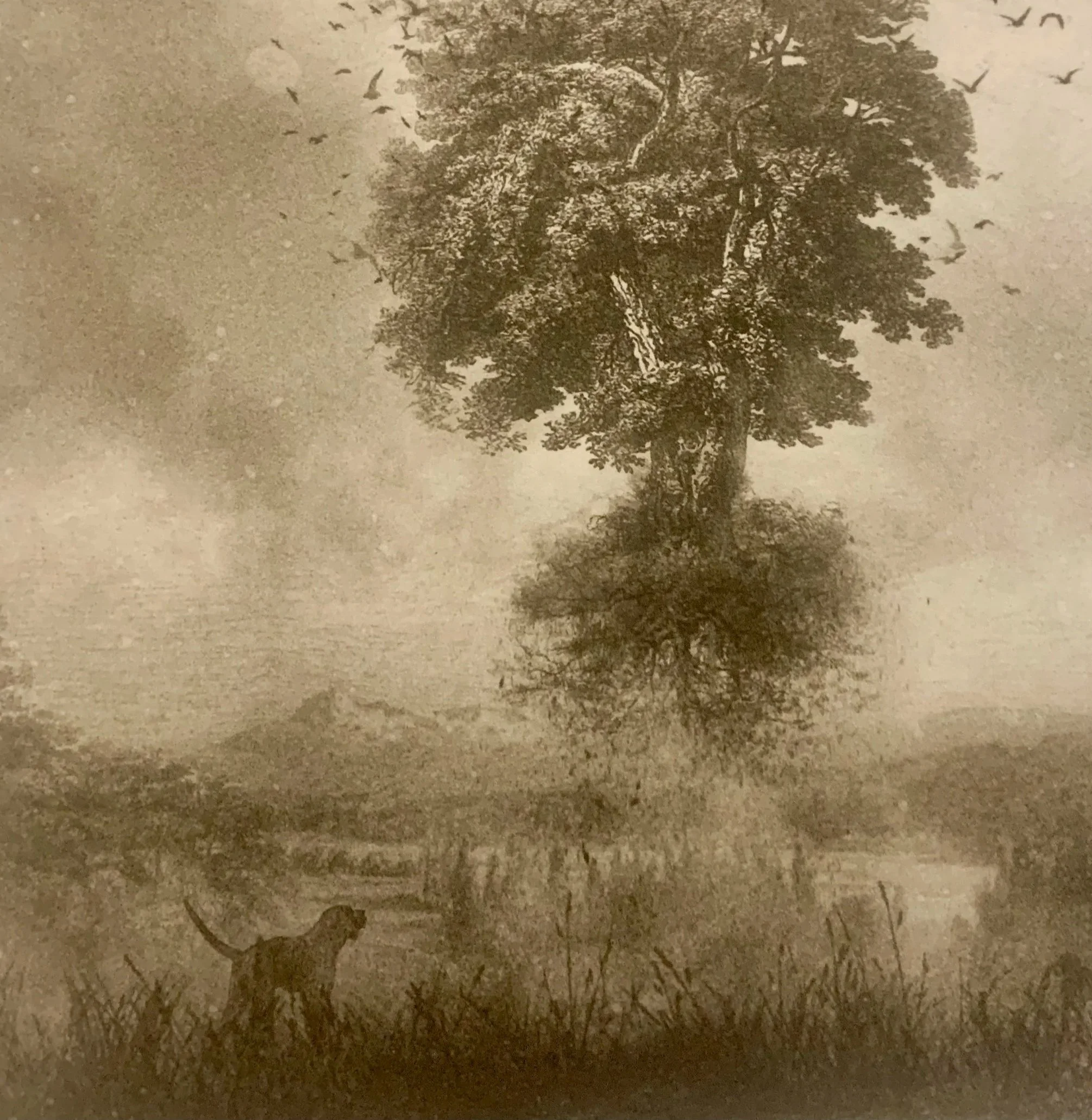
Etching
Drawn through a ground on metal and bitten into the plate before printing from the incised lines.

Aquatint
Textured areas created on a metal plate to produce tonal fields printed from the recessed surface.

Mezzotint
Worked from a roughened plate to create deep, velvety tones printed from the recessed surface.
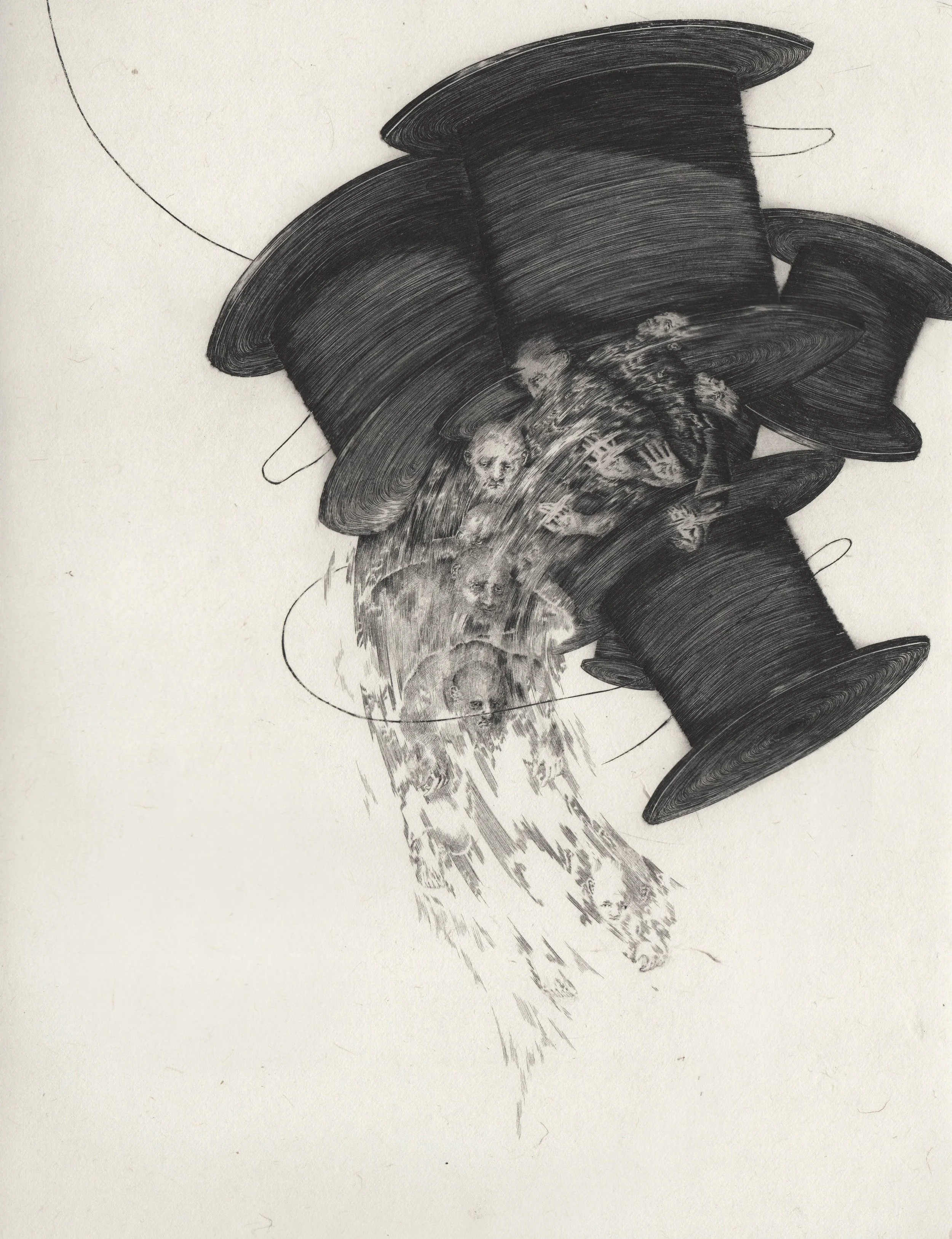
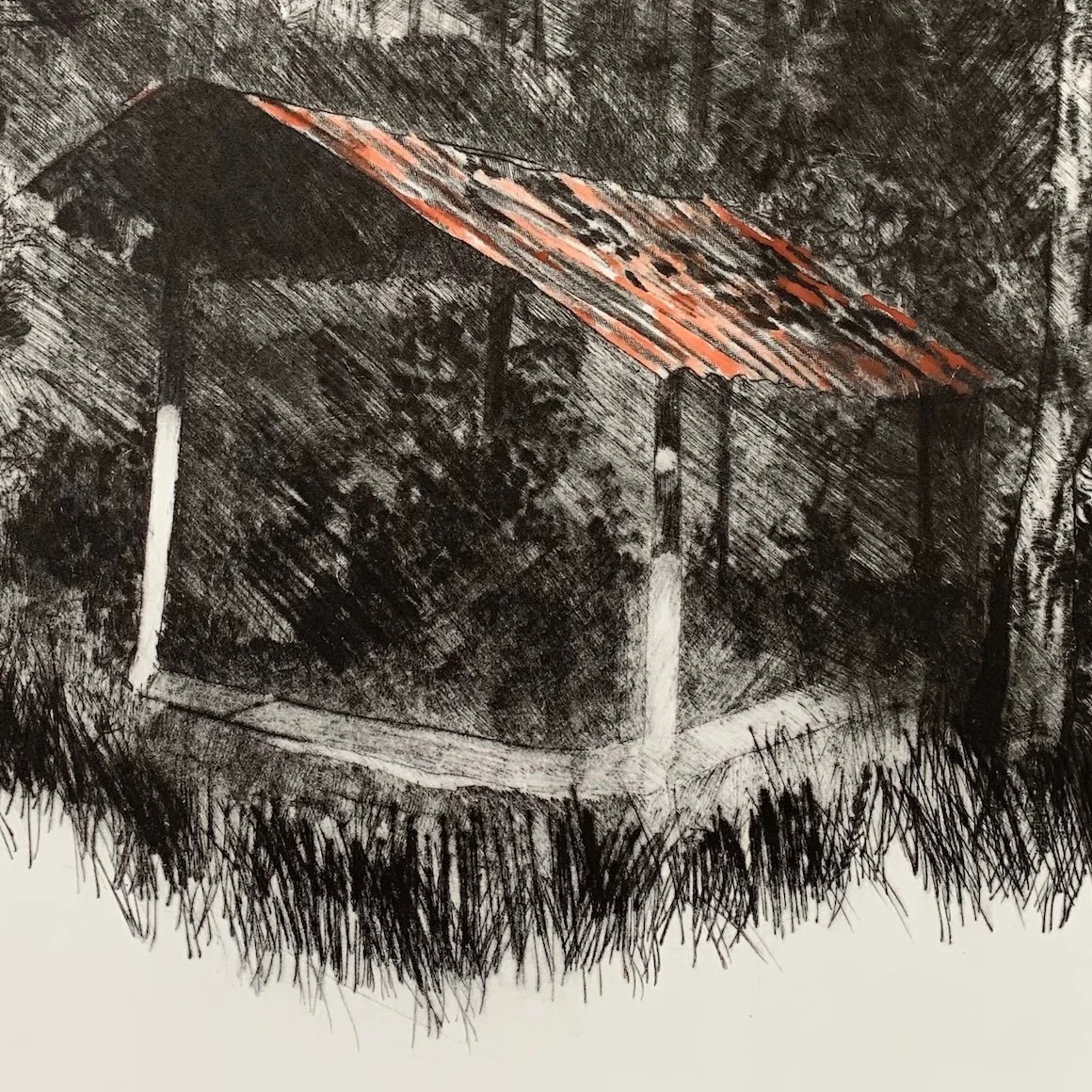
Drypoint
Scratched directly into a plate, creating soft, burr-edged lines that print with rich depth.