
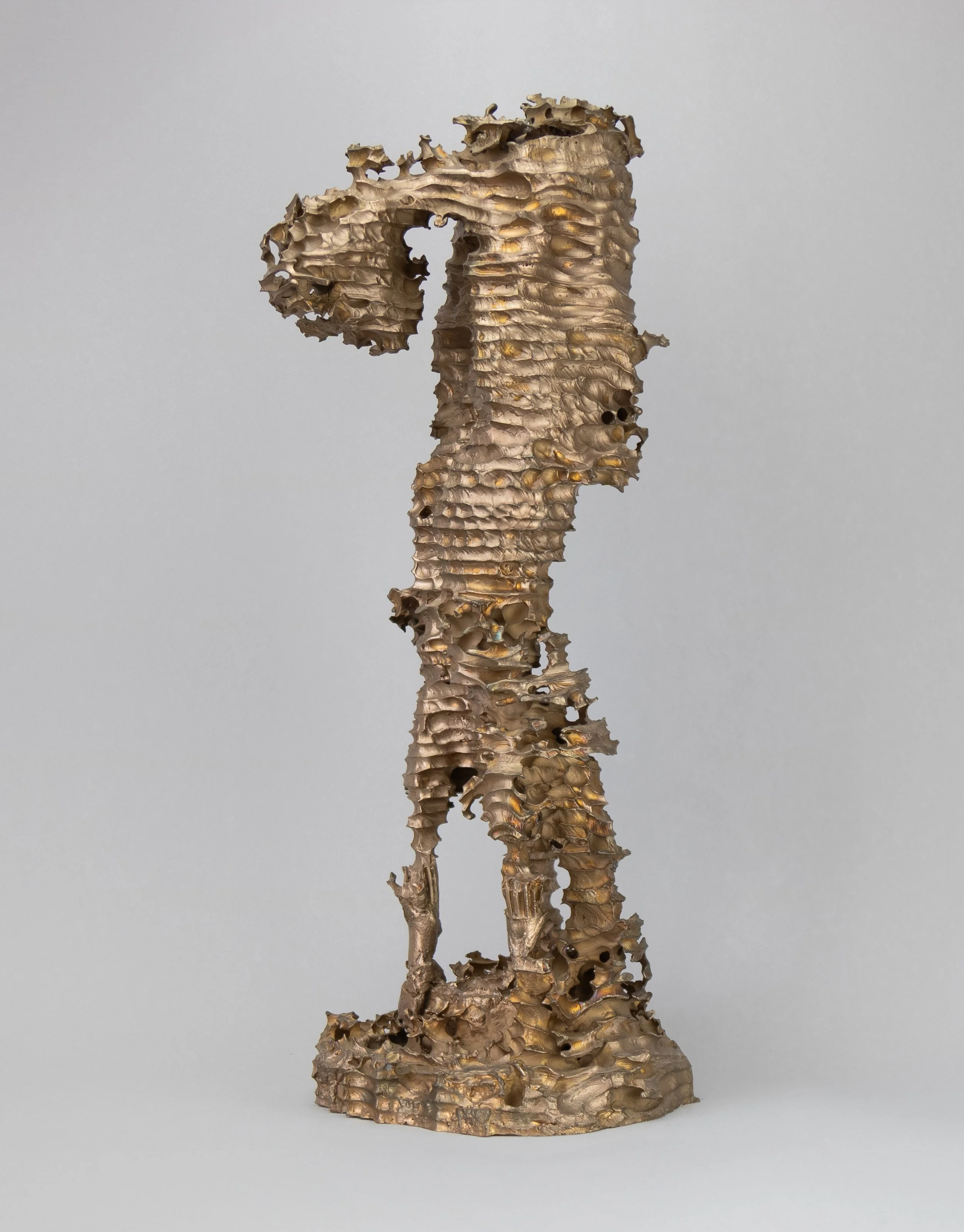
Casting
Casting is a process in which a form is created by pouring liquid material—such as metal, resin, plaster, or wax—into a mould. Once the material solidifies, it is removed from the mould, producing a three-dimensional object. The mould acts as the matrix, allowing multiple impressions to be formed from the same structure.
The artist may create the original model by hand, digitally, or through a combination of methods before forming the mould. Surface detail, texture, and scale are preserved through the casting process, and finishing techniques such as polishing or patination may further shape the final appearance.
Because the mould can be reused, casting lends itself to editioned sculptural works. The durability of the mould and material determines how many impressions can be produced before wear affects detail.
Casting is valued for its ability to translate form into weight and permanence. Within a print context, it extends the notion of editioning into the sculptural realm, emphasising repetition, material specificity, and controlled variation.
-
A mould is created from an original model.
Material such as bronze, resin, or plaster is poured into the mould.
The cast is removed, finished, and numbered within an edition.
-
Three-dimensional form.
Surface detail reflects the original model.
Material qualities influence weight and finish.
-
Mould durability influences how many casts can be made.
Editions are declared and limited.
Surface finishing may vary slightly between casts.
-
Determined by edition size.
Foundry marks and numbering confirm authenticity.
Smaller editions circulate less widely.