
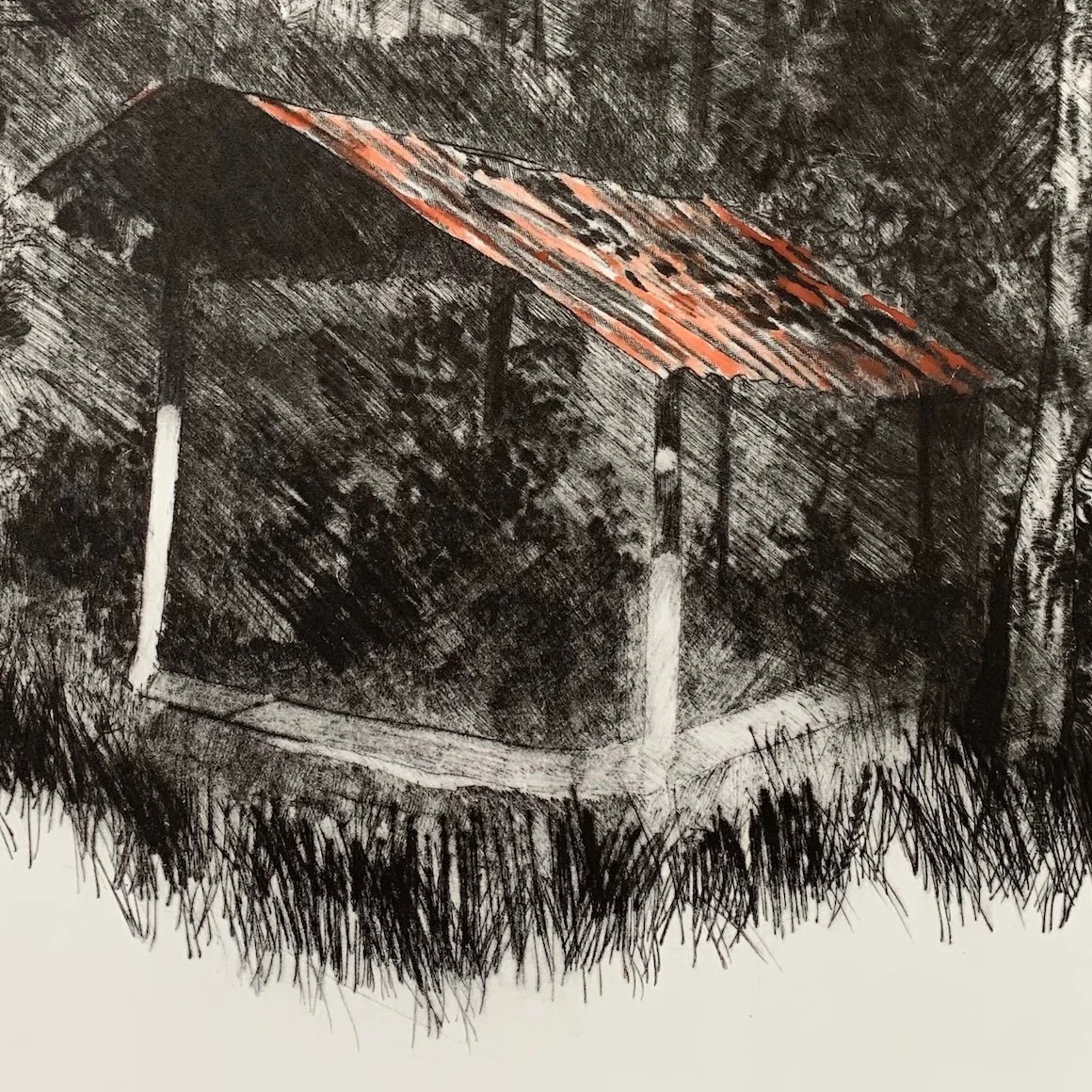
Drypoint
Drypoint is an intaglio printmaking process in which an image is scratched directly into a metal plate using a sharp tool. Unlike engraving, where the metal is cleanly removed, drypoint displaces the surface, pushing up a fine ridge of metal along the incised line. This raised edge, known as a burr, plays a defining role in the character of the print.
When the plate is inked and wiped, ink settles not only into the scratched line but also around the burr. Under the pressure of the press, this ink transfers to the paper, producing a soft, velvety line with a slight halo effect. The resulting mark often feels rich and atmospheric, with a tactile depth distinct from the crisp precision of engraved lines.
Because the burr is delicate, it gradually wears down with repeated printing. As a result, early impressions tend to have the most pronounced softness, and editions are often kept relatively small. The natural deterioration of the burr contributes to the uniqueness and material sensitivity associated with drypoint prints.
-
The image is scratched directly into a metal plate using a sharp tool.
The incised lines raise a burr (a fine ridge of metal).
Ink is worked into the lines and surrounding burr.
The plate is wiped and printed under high pressure.
-
Soft, velvety lines.
Slight blurring caused by the raised burr.
Expressive, intimate mark-making.
Visible plate mark around the image.
-
The burr wears down quickly with repeated printing.
Early impressions often appear darker and richer.
Edition sizes are typically small due to plate sensitivity.
-
Influenced by both edition size and plate wear.
Early impressions may be less common.
Smaller editions circulate less widely.